
Today, I Want to Talk About the Importance of Task Distribution in a Dental Clinic, Especially Regarding the Prevention of Oral Diseases
Until a few years ago, the role of a dental hygienist did not even exist. Patients would come to the clinic for a check-up, and the dentist or assistant would perform a cleaning to remove tartar (or sometimes not even that).
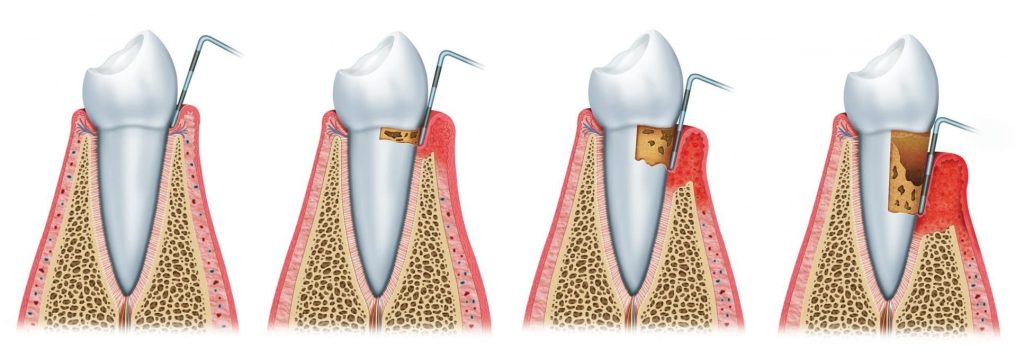
Over the years, however, it has become clear how important healthy gums are for people’s overall health. People can suffer from inflamed gums (gingivitis) and, if this is not treated in time and the patient is not instructed on how to prevent it, it can lead to an infection of the jawbone, where the teeth are anchored (periodontitis). Periodontitis, in turn, is associated with systemic problems such as high blood pressure, heart attacks, diabetes, Alzheimer’s…
Due to these insights, the team that helps you prevent and maintain good oral health has expanded, and in cases of periodontitis, they can also assist in its treatment.
You have probably noticed that during a check-up, the dentist gives small “pricks” in your gums and calls out numbers to the assistant. This is the PPS score and determines the health status of your bone and gums. This is done with a pocket probe. The pocket probe has marks that indicate millimeters. By placing the pocket probe between the tooth and the gum, the depth of the pocket can be read.
If the gums are healthy, this space is no deeper than 3 millimeters. In cases of gum inflammation where the jawbone also disappears (Periodontitis), these pockets become deeper. From 6 millimeters and more, the situation is severe. The dentist or dental hygienist probes your teeth and molars periodically. The result can be recorded globally in a PPS score or more precisely in a pocket or periodontal status in cases of severe gum inflammation.
Your allies in the dental clinic for the prevention and treatment of gum diseases are:
– **Prevention Assistant**: A prevention assistant is an assistant who has taken an extra course to be allowed to remove tartar in a healthy mouth (space between gum and bone equal to or less than 3mm). A prevention assistant not only cleans the tartar but also evaluates your oral hygiene and diet and gives you instructions to improve your techniques if necessary. Of course, they will perform a cleaning to remove the tartar where necessary but will also provide all the information to keep your mouth and gums healthy.
– **Paro-Prevention Assistant**: A paro-prevention assistant is a prevention assistant who has taken an additional course and can thus treat patients with early periodontitis (space between gum and bone is between 4 and 5 mm). They have learned to independently create a treatment plan for these patients and work closely with the dentist and dental hygienist in this area. Patients who have achieved a stable situation after treatment with the dental hygienist can also be seen for aftercare by the paro-prevention assistant.
– **Dental Hygienist**: This is the colleague who treats patients with severe periodontitis (space between gum and bone of 6 mm or more). This person performs a deeper cleaning to remove the bacteria located in the tartar beneath the gums. They will also give you the necessary instructions to keep your mouth clean, so these bacteria do not return. Treating periodontitis is not a simple task because the dental hygienist cannot treat periodontitis alone; they need the patient’s cooperation for the gums to heal and prevent these bacteria from re-entering the gums.
With a well-trained team that works closely together, we can effectively prevent and treat oral diseases, contributing to your overall health.