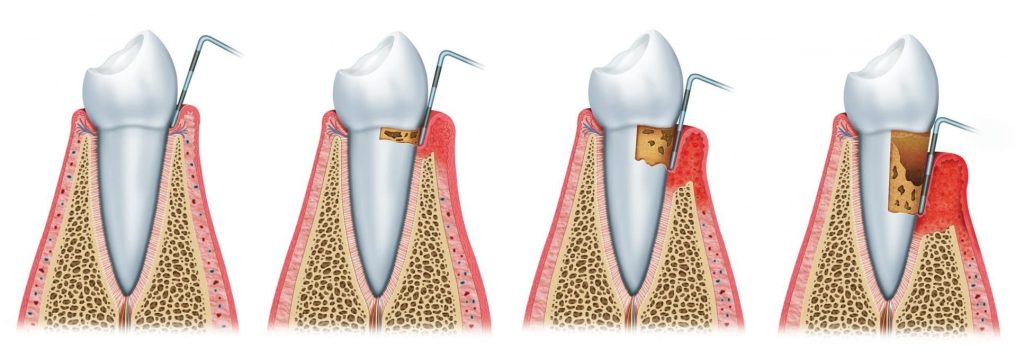

Today we are going to talk about an important aspect of oral care that is often forgotten: interdental cleaning. What is it, why is it important, and how do you do it? Let’s dive in!
What is interdental cleaning?
Interdental cleaning refers to cleaning the spaces between your teeth. While brushing is essential for good oral hygiene, a toothbrush does not reach all the spots between the teeth. If you only use a toothbrush, you leave about 30% of the plaque behind, which can lead to gum problems and tooth decay.
Why is interdental cleaning important?
Regularly cleaning the spaces between your teeth helps remove plaque and prevents gum inflammation (gingivitis) and tooth decay (cavities). Moreover, it contributes to fresh breath and an overall healthier mouth. Research has shown that people who clean interdentally daily have a lower risk of gum problems and tooth loss in the long term. Have you noticed that you get cavities between your teeth more often than in other areas? Also, periodontitis often starts between the teeth.
How do you clean between your teeth?
There are different methods and tools you can use for interdental cleaning:
1. Interdental Brushes: These small brushes are the best way to clean the larger spaces between your teeth. They come in various sizes, so let your dentist/hygienist choose the right size(s) for you. The correct size fits between your teeth without applying too much pressure, but you should feel some resistance. A brush that is too large will bend quickly, and one that is too small will not clean effectively. Gently place the brush between your teeth and move it back and forth. TIP! If your dentist/hygienist has recommended using a red brush from a particular brand but you want to try another brand, don’t be guided by the color! Pay attention to the size. The colors do not correspond to the same size across all brands. However, I still recommend using the brand suggested by your specialist.
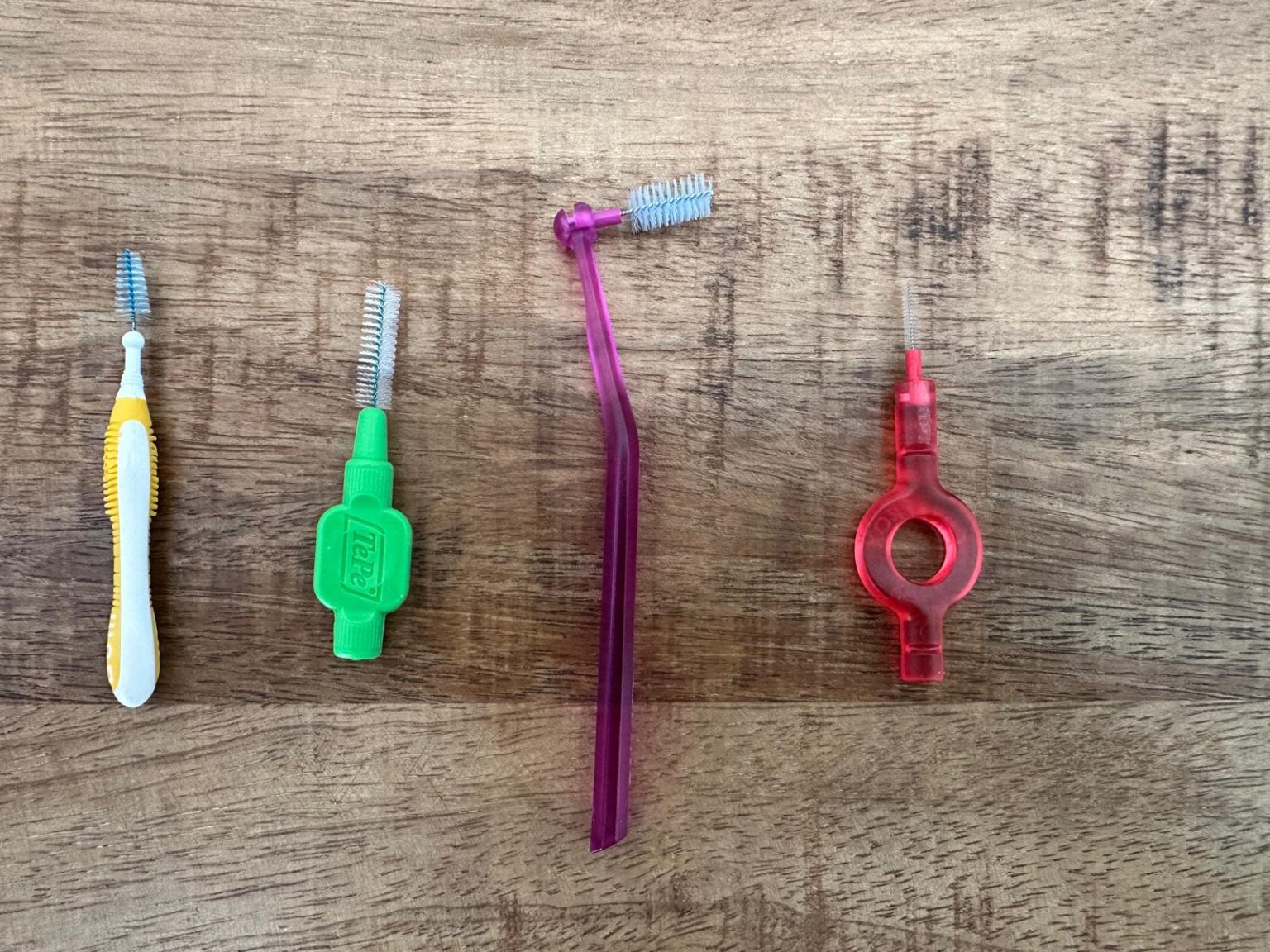
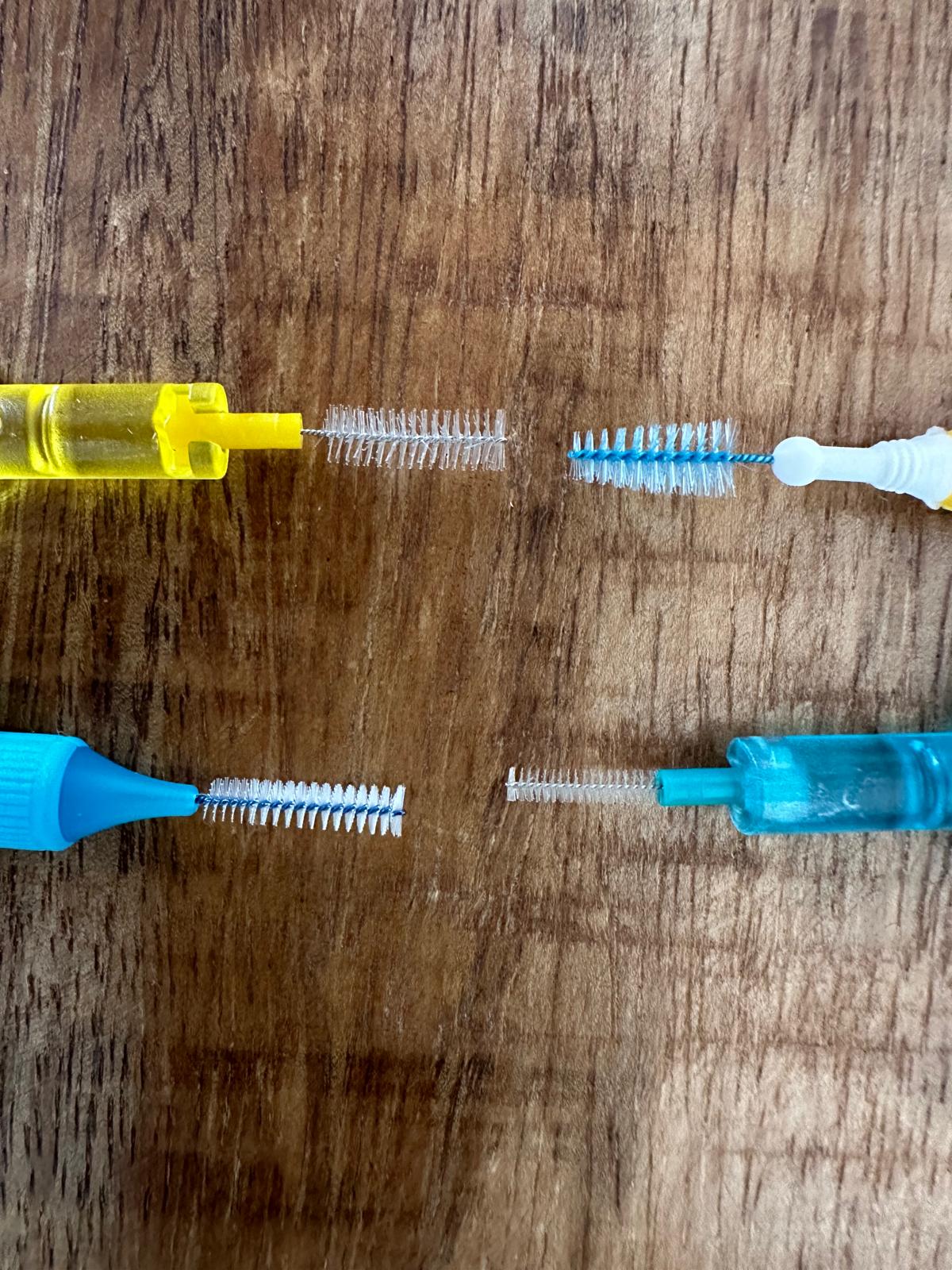
Same colour, different size
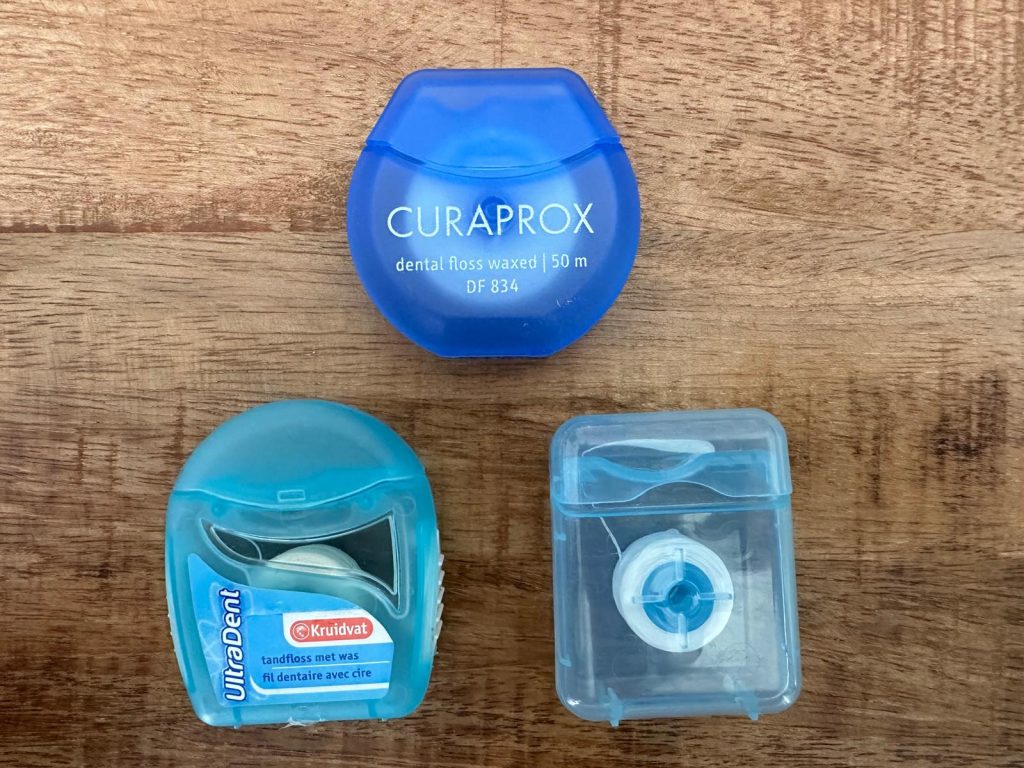
2. Dental Floss: Dental floss is ideal for cleaning contact points and the narrow spaces between your teeth where a brush cannot fit. Take a piece of floss about 45 cm long, wrap it around your fingers, and gently slide it between your teeth. Make a C-shape around each tooth and move the floss up and down to remove plaque and food particles.
3. Soft Picks: A soft pick is similar to an interdental brush but smaller and more flexible. They are made of soft rubber or plastic and have fine ridges. Soft picks are especially popular because they are gentle and friendly to the gums, making them ideal for people with sensitive gums. If you are not very skilled with interdental brushes, you can start using soft picks for a while until you get the right technique. Another advantage is that they are small and easy to carry, allowing you to take care of your mouth anywhere, even on the go.

Tips voor Succesful Interdental Cleaning
- Be Gentle: Your gums are sensitive, so be careful when cleaning between your teeth to avoid damage.
- Make it a Habit: Try to clean interdentally every day; it doesn’t necessarily have to be done together with brushing your teeth. Choose a time that suits you best.
- Choose the Right Tool: Work with your dentist/hygienist to find a method that suits you. Whether you opt for interdental brushes, dental floss, or soft picks, the most important thing is to do it daily.
Conclusion
Interdental cleaning is an essential part of good oral hygiene. It helps remove plaque and food debris from places where your toothbrush can’t reach. By cleaning interdentally daily, you can prevent gum problems and tooth decay, and contribute to a healthier mouth.
Thank you for reading! Don’t forget to visit your dentist regularly for professional cleanings and personalized advice. Do you have any questions about interdental cleaning? Let us know in the comments below.
Keep smiling and take care of your oral health!