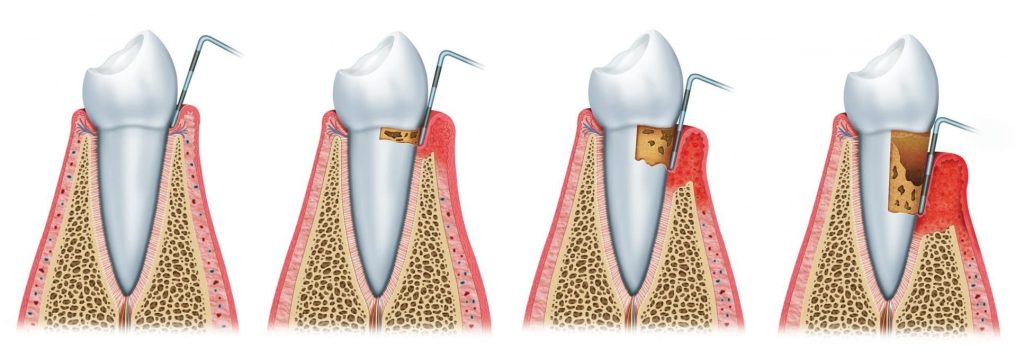

What is periodontitis?
Periodontitis is a serious gum disease caused by bacteria in the mouth. It often begins as a mild inflammation of the gums (gingivitis), but if left untreated, it can spread to the underlying bone that supports the teeth. This can lead to tooth loss and other health issues.
What causes periodontitis?
Periodontitis is primarily caused by the buildup of dental plaque, a sticky film of bacteria that forms on teeth. If plaque is not regularly removed through proper brushing and interdental cleaning, it can harden into tartar. This tartar irritates the gums and causes inflammation. Factors that increase the risk of periodontitis include:
- Poor oral hygiene
- Smoking
- Hormonal changes (e.g., during pregnancy)
- Diabetes
- Stress
What is periodontitis related to?
Periodontitis is not just a localized problem in the mouth; it is also linked to general health issues. Studies have shown that periodontitis can contribute to or be associated with:
- Cardiovascular diseases: Inflammations in the mouth can increase the risk of heart disease.
- Diabetes: Periodontitis can make it harder to control blood sugar levels, while diabetes, in turn, increases the susceptibility to gum problems.
- Pregnancy complications: Women with periodontitis are at a higher risk of preterm birth or low birth weight.
- Alzheimer’s: Chronic inflammations, such as those caused by periodontitis, are linked to an increased risk of neurodegenerative diseases like Alzheimer’s. The bacteria responsible for periodontitis can reach the brain through the bloodstream, triggering inflammatory processes there.
How is periodontitis treated?
The treatment of periodontitis depends on its stage or severity. It involves the following steps:
-
Examination and diagnosis: During a check-up, the dental hygienist measures the depth of the pockets (spaces between the gums and the teeth) and may take X-rays to assess bone loss.
-
Professional cleaning: In the early stages, periodontitis can be addressed with a thorough cleaning to remove plaque and tartar, both above and below the gumline.
-
Deep cleaning: For advanced periodontitis, a more intensive treatment is needed to remove bacteria and inflamed tissue from deep below the gumline.
-
Aftercare: To prevent recurrence of the condition, the dental hygienist creates a personalized prevention plan. Regular check-ups and cleanings are crucial.
-
Potential surgery: In severe cases, surgical intervention may be necessary to repair damaged tissue.
Coverage of the treatment
Unfortunately, periodontitis treatment in the Netherlands is often not fully covered by health insurers. The initial treatment, involving deep cleaning, is usually the most expensive. After that, costs decrease as the focus shifts to regular aftercare by the dental hygienist. This aftercare is essential to keep periodontitis stable and prevent further damage.
Treating periodontitis is a team effort between the professional and the patient. You play a key role in your own recovery. By maintaining good oral hygiene at home and following recommendations, you can prevent the condition from returning. With effective collaboration, it’s possible to restore gum health, reduce the frequency of visits to the dental hygienist, and eventually switch to check-ups with a preventive assistant or perio-prevention assistant.
Periodontitis: a “new field”?
Some people claim that periodontitis is a new concept created to generate more income, as it didn’t exist in the past. This is a misconception. Periodontal diseases have existed for centuries, but medical knowledge and treatment methods have greatly improved. In the past, many dental problems simply went unnoticed or untreated, often resulting in early tooth loss.
Thanks to scientific research, we now better understand how oral health is connected to overall health. This has led to greater emphasis on prevention and early intervention for issues like periodontitis. This is not a “new field” but rather a sign of progress in healthcare.
Why is treatment important?
Treating periodontitis is essential for maintaining a healthy mouth and a healthy body. Early intervention can prevent serious complications and often helps preserve teeth.
Do you have questions about periodontitis or other oral health concerns? Feel free to reach out via email. I’m happy to assist!
Why superficial cleaning is NOT a treatment for periodontitis
– What happens with superficial cleaning?
The prevention assistant can only clean up to 3 mm below the gumline (supragingival). This makes teeth look clean, but:-
The bacteria causing the inflammation remain deep in the pockets.
-
Removing only the tartar at the edge can cause the gum to reattach, trapping bacteria underneath.
-
It’s like sealing a wound that’s still infected — it looks better on the outside, but the infection keeps growing inside.
– Why must a dental hygienist do this?
A dental hygienist is specially trained to:-
Clean deeply under the gums (subgingival).
-
Safely and completely remove bacteria and tartar from the pockets.
-
Truly address the inflammation, so healing is possible.
– What if you do nothing or only get superficial cleaning?
-
The inflammation stays active.
-
Jawbone continues to deteriorate.
-
Teeth may loosen or be lost over time.
-
Higher risk of heart attack, type 2 diabetes, and other systemic conditions.