While you’re reading this, in what position are your lips and tongue? Are you breathing through your nose or your mouth? Here’s advice that will change your life: the natural position for healthy breathing is always with a closed mouth, inhaling and exhaling through the nose.
Many people don’t realize that the way we breathe has a significant impact on our (oral) health. If you breathe through your mouth instead of your nose, it can lead to various oral problems and health issues. In this blog post, I explain why nasal breathing is so important and how you can integrate it into your daily life to prevent oral diseases.
The serious health consequences of mouth breathing
-
- Teeth and Braces: A good balance between the forces of the tongue and the muscles of the lips and cheeks is crucial for the proper alignment of teeth and for healthy jaw development. Mouth breathers often lose this balance. When your mouth is open, your orthodontic treatment will take longer and be much more challenging for your orthodontist. The risk of orthodontic relapse is therefore very high, which may result in the need for braces again in the future.
- Speech: When people have an open mouth, they are more likely to have difficulty with certain speech sounds. The most common speech problem is a lisp, or the inability to pronounce “S” sounds correctly. Speech is affected because an open mouth also involves a “tongue-thrust swallowing pattern.” This type of swallowing pattern causes the tongue to protrude or push forward during speaking and swallowing.
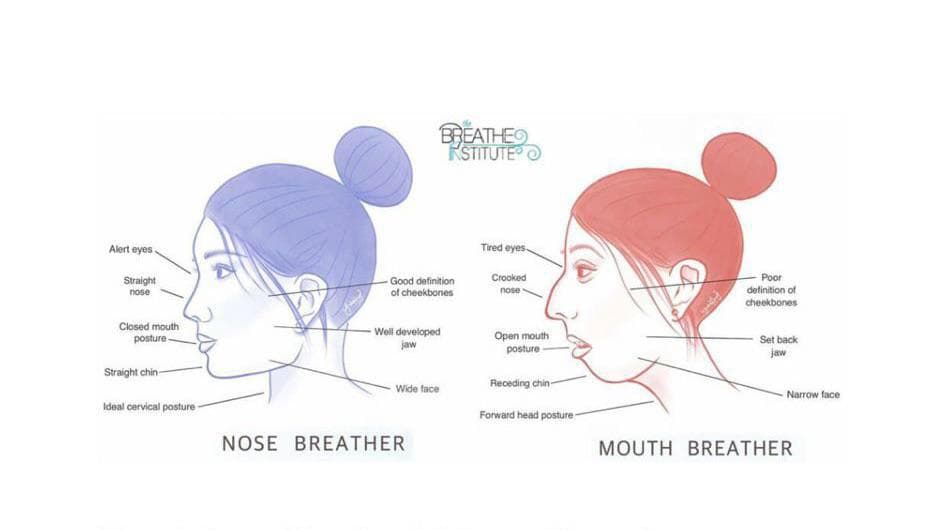
- Facial Growth and Development: It’s important to realize that growth is a very powerful force. A child with an open mouth is likely to grow into an adult with flatter facial features, less prominent cheekbones, a longer face, droopy eyes, lower facial muscle tone, a narrower palate, and in many cases, even a smaller lower jaw. Closing the mouth and breathing through the nose can help prevent these negative growth patterns.
- Sleep and Oxygen: When adults and children breathe through their mouth during the day, they are likely to continue mouth breathing throughout the night. Mouth breathing at night, combined with an obstructed airway, are two symptoms directly related to sleep apnea and altered levels of carbon dioxide and oxygen in the bloodstream. When less oxygen reaches the brain, learning and concentration at school become problematic for many children. In adults, chronic fatigue, tiredness, and brain fog are common symptoms associated with these issues.
- Causes Dry Mouth: Mouth breathing dries out your mouth by reducing moisture and saliva production. Saliva is essential for neutralizing acids produced by bacteria in the mouth and for rinsing away food particles. A dry mouth increases the risk of tooth decay and gum inflammation.
- Maintains a Healthy Bacterial Balance: The nose filters and humidifies the air we breathe, which helps maintain a healthy balance of bacteria in the mouth. When you breathe through your mouth, harmful bacteria can proliferate more easily, leading to an increased risk of infections and bad breath.
- Deteriorates General Health: Nasal breathing promotes better oxygen intake and increases nitric oxide levels in the blood, which helps improve lung function, blood pressure, and overall energy levels. This contributes to better general health and well-being.
Tips to encourage nasal breathing
-
- Practice Mindful Nasal Breathing: Try to consciously breathe through your nose throughout the day, especially during periods of rest and light activity. This can help establish a habit.
- Improve Your Nasal Airways: If you frequently experience nasal congestion, consider saline sprays or nasal decongestant sprays to keep your nasal passages open.
- Sleep with Closed Mouth: Ensure that you sleep with your mouth closed. There are special tapes and devices available that can help you keep your mouth closed during sleep.
- Breathing Exercises: Consider breathing techniques such as Buteyko or pranayama, which can help you breathe better through your nose and improve your breathing pattern.
- Consult a Specialist: If you have persistent issues with nasal breathing, consider consulting an ENT (Ear, Nose, and Throat) specialist or another healthcare professional to address underlying issues.
By consciously choosing for nasal breathing, you can not only improve your oral health but also your overall well-being. It´s a small change that will make a big impact on your life. Start today and feel the difference!